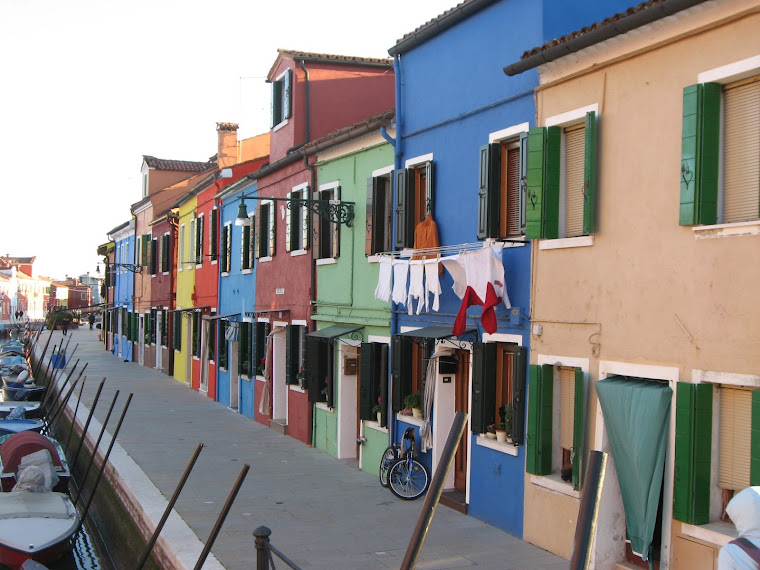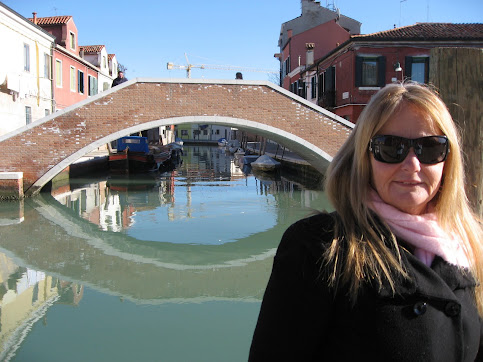
Venice in the Winter

Venice in the Winter
Picture perfect ... even me!

Thursday, May 01, 2008

Pamukkale - Ephesus & The Shrine to Virgin Mary

Inside the Shrine at Pumukkale

Info on the Shrine to the Virgin Mary ..Located on the top of the "Bulbul" mountain 9 km ahead of Ephesus, the shrine of Virgin Mary enjoys a marvelous atmosphere hidden in the green. It is the place where Mary may have spent her last days. Indeed, she may have come in the area together with Saint John, who spent several years in the area to spread Christianity. Mary preferred this remote place rather than living in crowded place.


The house of Virgin Mary is a typical Roman architectural example, entirely made of stones. In the 4th century AD, a church, combining her house and grave, has been built. The original two-stored house, which consisted of an anteroom (where today candles are proposed), bedroom and praying room (Christian church area) and a room with fireplace (chapel for Muslims). A front kitchen fell into ruins and has been restored in 1940's. Today, only the central part and a room on the right of the altar are open to visitors. From there one can understand that this building looks more like a church than a house. Another interesting place is the "Water of Mary", a source to be found at the exit of the church area and where a rather salt water, with curative properties, can be drunk by all.


Paul VI was the first pope to visit this place in the 1960's. Later, in the 1980's, during his visit, Pope John-Paul II declared the Shrine of Virgin Mary has a pilgrimage place for Christians. It is also visited by Muslims who recognize Mary as the mother of one of their prophets. Every year, on August 15th a ceremony is organized to commemorate Mary's Assumption.


And another lucky wishing wall.. covered in bits of paper and notes... Phil, Greg, Dave and Gabrielle posing...


Phil in front of the dedication outside the Shrine


Ephesus; Ancient Greek city

My favourite.. a footprint pointing in the direction of the Brothel.. the worlds oldest profession!! Ephesus; Ancient Greek city of Asia Minor, near the mouth of the Menderes River, in what is today West Turkey, South of Smyrna (now Izmir). One of the greatest of the Ionian cities, it became the leading seaport of the region. Its wealth was proverbial. The Greek city was near an old center of worship of a native nature goddess, who was equated with the Greek Artemis, and c.550 B.C. a large temple was built. To this Croesus, who captured the city, contributed.


The god of Nike.. oh yes.. and me.


This library is one of the most beautiful structures in Ephesus. It was built in 117 A.D. It was a monumental tomb for Gaius Julius Celsus Polemaeanus, the governor of the province of Asia; from his son Galius Julius Aquila. The grave of Celsus was beneath the ground floor, across the entrance and there was a statue of Athena over it. Because Athena was the goddess of the wisdom.
The scrolls of the manuscripts were kept in cupboards in niches on the walls. There were double walls behind the bookcases to prevent the them from the extremes of temperature and humidity. The capacity of the library was more than 12,000 scrolls. It was the third richest library in ancient times after the Alexandra and Pergamum.
The facade of the library has two-stories, with Corinthian style columns on the ground floor and three entrances to the building. There is three windows openings in the upper story. They used an optical trick that the columns at the sides of the facade are shorter than those at the center, giving the illusion of the building being greater in size.


Just a few words of explanation....


And I guess this one doesnt need any explanation.. wherever there are tourists... Genuine Fake Watches.. I ask you!!!

Ephesus; Ancient Greek city of Asia Minor, near the mouth of the Menderes River, in what is today West Turkey, South of Smyrna (now Izmir). One of the greatest of the Ionian cities, it became the leading seaport of the region. Its wealth was proverbial. The Greek city was near an old center of worship of a native nature goddess, who was equated with the Greek Artemis, and c.550 B.C. a large temple was built. To this Croesus, who captured the city, contributed.


In 356BC the Greeks built the Artemesium (a colossal Ionic temple dedicated to Artemis the fertility goddess) which was one of the Seven Wonders of the ancient world. During the 2nd century BC, Ephesus was the fourth largest city in the eastern Roman Empire, famous for its Artemesium, the Library of Celsus and its medical school.

Kusadasi in Turkey Acropolis of Pergamum

Me in front of the Theatre of Pergamon, one of the steepest theaters in the world, has a capacity of 10,000 people and was constructed in the 3rd century B.C. The theater underwent changes during the Roman period under the reign of Caracalla. There is a 246.5 m long and approximately 16 m wide stoa (portico) in front of the theater. The road in front of the theater leads to the Temple of Dionysos (known in Rome as Baccus, god of wine). The temple was constructed in the 2nd century B.C. and reconstructed in marble during Caracalla's period (211-217 AD). Its dimensions are 11.80 x 20.22 m. The temple has a very high staircase in front with a height of 4.5 m and 25 steps and from the top the view was amazing.. another steep climb!


The famous Altar of Zeus in Pergamon is on the south of the theatre. Eumenes II (197-159 BC) constructed it as a memorial of the victory against the Galatians. This Altar has the shape of a horseshoe and its dimensions are 36.44 x 34.20 m. It is composed of four parts and the high relieves on it describe the war between the giants and the gods. The Altar which was taken away from Pergamon in 1871 and carried to Germany by the German engineer Carl Humann, is exhibited at the Museum of Pergamum in Berlin, in a manner conforming to its original. The Turkish government is trying to get it back from Germany bringing the issue to the international court. On the south of the Altar, the Agora (market place) belonging to the 2nd century BC, is situated. In the middle of the Agora there is a small altar. Downwards in the Acropolis, the central city is placed. Inside Pergamon, there is the Temple of Serapis, built for the Egyptian Gods in the 2nd c. AD. and called as the Red Courtyard by the locals. This is a basilica shaped building constructed under the reign of Hadrian, then, in the 4th century, it was converted into a church dedicated to St John and became one of the 7 churches of Christianity.

The city went through the Arab, Byzantine and finally the Turkish period in the 14C.
It is believed if you tie something to this tree and make a wish it will come true and you will be very lucky. Our tour guide showing us 'the tree' tied with hundreds of bits of tissue!!

Pergamum was an ancient city founded by colonists on the Aegean coast of Anatolia at the site of the present-day city of Bergama. It was on a tributary of the Bakircay (Caicus River), enclosed by high mountains. Fertile, self-contained and easily defended, it provided the perfect setting for the maintenance of a city state.


Wednesday, April 30, 2008

Anzac Day at Gallipoli

The commemorative plaque for the 'unknown' soldiers who lost their lives. All in all, more than 8700 Australians and more than 2700 New Zealanders were killed in the Gallipoli Campaign. In relation to the two countries' population at the time, this was a horrendously massive loss of lives.The British lost 20,000 and the Turks 200,000 men!
Plaque at Anzac Cove where they landed that fateful day.
Another plaque with a memorium to the lives lost ... Me standing in front of a statue of a Turkish Soldier.. this was about 4.5km into the uphill walk.
Anzac Cove looking up towards North Beach from one of the cemetaries. The ANZAC’s landed at Anzac Cove. Here they were faced with steep cliffs which they had to climb to get off the beach. To make matter worse, Anzac Cove was a tiny beach and quickly became very congested.
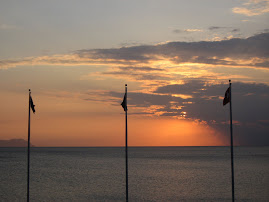
The three flags just as the sun was setting
About 4pm and the crowds. Of course this is when the sun was shining and only half the people had arrived, they continued to pour in until about 3am.
Me again before we actually got to the Cove standing in front of another commemoration
The view looking down from about 3/4 of the way up our walk to the NZ ceremony looking down not only on the cemetary but also on the trail of people struggling up the hill... imagine doing this in full military uniform and rifles?
Winston Peters with the Army Band in the background at the NZ Service.
Yep it was amazing... one of the most memorable things I have done although I wouldnt want to do it again.. laying on the hard ground for 16 hours isnt really my cup of tea.. but a kind of pilgrimage and a once in a lifetime thing to do.
We arrived at ANZAC cove about 3.30pm and with our warm gear and sleeping bags found a place on the grass where we had to entertain ourselves until 5.30am for the Dawn Service. It was freezing!! Don't let anyone tell you otherwise. The whole experience was one of the most moving experiences of my life (sounds corny, sorry but it was!).
Amongst 15,000 Kiwis and Ozzies the time went relatively fast although sleep was impossible as it was so crowded, people crawling all over you to get out to the toilets, the wind howling (I didn't take a scarf or gloves like some!) but I did have a sleeping bag. For most of the night the big screen played tributes to the thousands who died there, an Army Band played tunes from first world war era, some idiot ozzie kept making speeches (yep he was a pain! and told the crowd off for doing the Mexican Wave.. told them it wasnt the MCG.. one had to laugh) and parts of various documentaries about the horrific conditions during the Gallipoli campaign were played.
At 4am the crowd was stirred into action - not that we took much waking as very few of us got more than an hours sleep all night. Judy Bailey was the MC, Winston Peters spoke as did his Australian counterpart and various other important people whose names I can't even remember.
At about 7am the dawn service was all over and 15,000 people trapsed up the hill (and it was a killer hill) from the dawn service to the Australian Service.. we kept on walking to the NZ service which wasn't till 12.30. It was 5km straight up.. and up.. and up. Our group had split up but we had instructions on the busses and by 8.30 we were at the top and were one of the first there so had a great seat for the NZ service.
Once again Judy Bailey was MC and Winston spoke. He spoke well actually, addressing all the young people pushing home the message that the number of us there were the number of NZers who lost their lives at ANZAC cove at a time when our population was only 1 million (a fledgling nation!)He said... look at the person next to you.. if this was 1915 they would be dead within 3 months!! Another moving ceremony.. I don't think I have ever been that affected by an event in my life. It was numbing.
About 1.30 we lined up for the busses... yep all 15,000 (more or less) of us and waited as the busses (all numbered) rolled in, filled up and rolled out again. By 3pm we were away and thought we had waited ages only to see a queue of busses still to go about 3km long!! Our bus driver did well.

Tuesday, April 01, 2008

Rome night out


Last weekend in Rome out enjoying the sights and lunch.. bloody cold but!


Friday night haunt.. Pantheon Bar


Everyone needs a walking school bus


Betsy waiting for someone to buy another round :-)


Thursday, March 27, 2008

Forli and Ravenna at Easter


Basilica of Sant'Apollinare Nuovo is the name of the first Cathedral we visited and was built in the 6th Century.


Ravenna was absolutely beatiful. The guidebooks say it is one of the most beautiful Towns in Italy and this is due to the fact that the basilicas and baptisteries contain the richest heritage of mosaics dating from the 5th and 6th centuries and eight historic buildings included in the World Heritage List of UNESCO. Ravenna was the most important political and cultural centre of the West during the early times as it is situated near the coast and therefore a politically astute area for ancient civilisations to defend themselves. Of course, there is far more to it than that.. but not being well up on history thats about the limit of my understanding.
The processions of Virgins and Martyrs represent one of the most typical examples of the Byzantine style and while Nicola was extremely informative unfortunately I have forgotten. Suffice to say it was beautiful, the gold flec is real and the tiles are all set on it.

Yep, this was built in the 6th Century and is still extremely beautiful. This cylindrical bell tower was built later than the church, and is relatively 'new' having been in existence only since the 9th or 10th Century!!


Basilica of San Vitale - Built during the time of Archbishop Maximian in 548. The Basilica of San Vitale is among the most important monuments of early Christian art in Italy, above all for the splendour of its mosaics. The eastern influence, always presents in the architecture of Ravenna, has a dominant role here. No longer a basilica with nave and two aisles but a central octagonal plan, surmounted by a cupola and the whole supported on 8 pilasters and arches. The dome ceiling and the niches were decorated by frescoes painted in 1780 by Barozzi and Gandolfi of Bologna and Guarana of the Veneto.The floor is kept dry by pumps since it is below the level of the water table.
This is a chair made of Ivory, yes real Ivory. It is sitting inside a glass case and you can see in the picbelow the detail of the carving.

Detailed carving on the Ivory Chair.

Still today the locals study mosaics and this information board contained all the instructions. Not for the faint hearted I say.. a lot of time and effort goes into the art.

Nicola outside the most ancient of Ravenna monuments, The Neonian Baptistry at least with regard to when building began, it dates to the end of the 4th or the beginning of the 5th century. It is a simple octagonal plan brick building with four large niches spreading towards the exterior and with the doors buried (the original level is about three metres below the present one). The Baptistery was splendidly decorated with mosaics by bishop Neone in 450. Inside, besides very beautiful mosaic decoration of Hellenic-Roman influence, several stucco-works and marble parts remain. In the middle there is an octagonal font of Greek marble and porphyry, reworked in the 16th century, which still preserves some original fragments.
Us two being tourists and taking pics of ourselves!!
Me in one of the streets.. looks almost deserted.. well it was Easter after all.
Leaving Rome on Good Friday on a bus the start of the trip was hectic as Good Friday is not a public holiday in Italy so everyone was leaving Rome for their Easter break.. the bus was full and the roads were the same. But I arrived on time in Forli where Nicola met me and was a wonderful host. We had a fantastic dinner of seafood and pasta ..... if only I could cook pasta sauce like that!
Easter weather was typical of many Easters in NZ where it was cold and rainy despite which we got out and about and visited lots of places as well as having a fantastic Easter Lunch with Nicola, her Dad and a friend. The marscapone was to die for!! Maybe one day I will give up on trying to learn the language and go for learning to cook the Italian cuisine.. but I suspect it would be just as difficult.


Monday, March 17, 2008

My Rugby Fix!! 6 Nations.. Italy v Scotland at Flaminio Stadium


Flaminio Stadium was sold out but Ross (a fellow English teacher with a definite Scotish accent) and I braved the masses and took our chances on buying tickets at the game: surely with all the bribery and corruption over here a couple of tickets shouldn’t be hard to acquire?

It was amazing! Firstly Piazza Flaminio was packed with Scots over for the weekend… a band playing Scotland the Brave… bars full to overcrowded with people already half cut…… and we still had a 15 minute walk to the stadium.

At Euro 25 each we thought our tickets were good value and as we made the way to our seats we were handed a printed sheet with the Italian National Anthem in both English and Italian and the Scottish National Anthem in Scottish and English; not sure which language was the most difficult.. Scottish or Italian and we made a terrible job of singing them both, or should I say trying to.

With no particular alliance to either team I simply soaked up the atmosphere which was akin to any Bledisloe Cup Match. With the bagpipes belting out Prood Edeard’s Airmy, An sent him hamewart followed by Fratelli d’Italia s’edesta… the game kicked off.

And from there… well not a great game to watch.. too many kicks for my liking but the two teams being neck and neck for most of the match gave it an exciting finish.. and oh yes, the consumption of a few Peroni Beers in the hot sun went down a treat too.

Castel Gandolpho

View of the Lake from the Town at the top.
The church in the main Piazza at Castel Gandolpho


The central church.. with the huge dome on top.

Betsy, Michael, Ross and I .... about to have lunch!

Matt, Jenny, Ross, Betsy and Karen on the way up the hill to to the town.
Matt, Jenny, Ross, Betsy, Karen, Michael and me with a view of the mountain in the background. Not the best of days.. but after all its still only March.
Well it doesnt look much like Orvietto does it? Of course not... course it isn't. We had all planned on going to Orvietto for the day but with the Rome Marathon, no busses, streets closed one of our number was an hour late.. so Castel Gandolpho it was.
Being the home of the Pope's summer palace I was expecting something far more luxurious.. although perhaps it may have been but as it was closed and we could only look in awe up the long drive through high wrought iron gates. From July to September the Pope preaches a midday sermon from here every Sunday.. maybe some other time.
The train station is half way between the lake and the town. We opted to walk up to the town to explore and didn't quite make it down to the Lake. Once again, with a train every two hours one doesnt risk missing it.
We had a fantastic lunch.. the best food to date in Rome. No pizza and pasta but real food!! I had very thin slices of pork (from a baby pig I am assured) and it was so tender.. drenched in a balsamic type sauce and dripping with Rosemary... absolutely to die for.
And next weekend is Easter and its off to Forli in Bolgna to catch up with Nicola whom I met on the CELTA course.