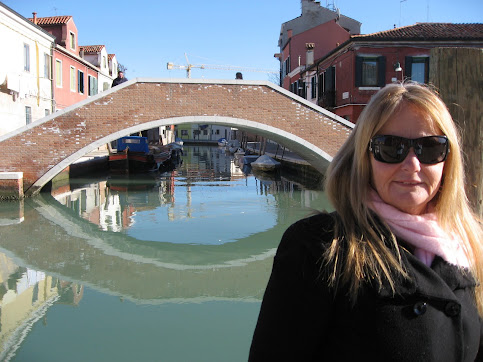
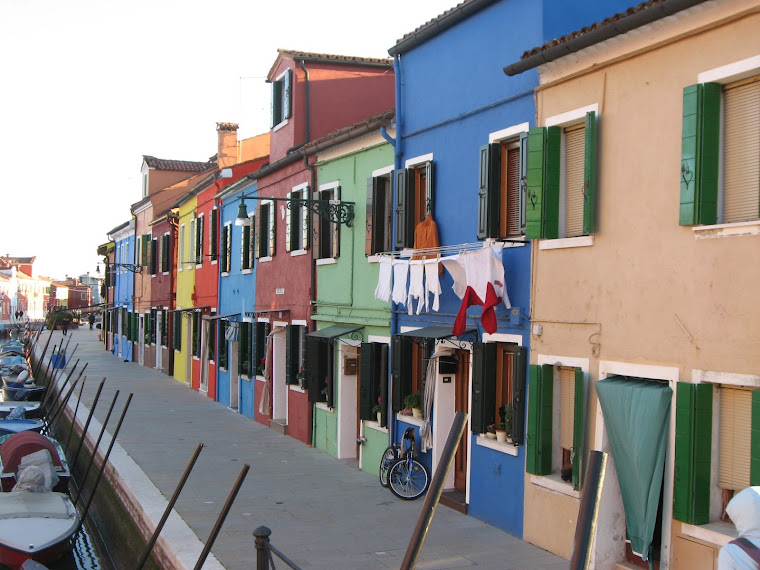
Venice in the Winter

Venice in the Winter
Picture perfect ... even me!

Saturday, May 24, 2008

Abruzzo - Capestrano Night Out!!

Ross buying some (very) expensive wine.. well at Euro 4 a gallon it had to be up there with the best.. and of course clutching his purchases of the day.. a brand new pair of shoes.. a man after my own heart!

Ummm... attempting to be a Dalek... I always wondered what those culender things were for


The board after an extremely challenging game of scrabble...


And the results the following day.. asleep at lunch

Monday, May 05, 2008

Naples weekend

The highlight of the weekend for me was going to the top of Mt Vesuvius which is regarded as one of the most dangerous volcanoes 9n the world because of the population of 3,000,000 people now living close to it. It is the most densely populated volcanic region in the world. The bus from Pompeii struggled and actually broke down.. however against Italian tradition a new bus did arrive within 10 minutes!! Another amazing feat. Once at the end of the line for the bus there was still another 2km steep uphill climb on a road/path of volcanic rock. I made it though! Having opted out of the Mt Etna climb last year I made sure I had walking shoes on and stuggled onwards and upwards with Ross. The views were amazing and the crater huge as you can see from these pics.


Ross had an idea to cover the top of Vesuvius with a tarpoulin to contain the next eruption.. looks like someone had the idea before him.. as here is the proof!

Me at the top looking down on Naples and its surrounding towns and villages.. and of course Pompeii.


The entrance to the Crater Road


Pompeii. I must confess I wasnt that fussed with Pompeii this time.. I mean three times in three years and it hasnt changed a lot since 79AD when Vesuvious erupted. But.. being the kind Aunty I am Morgan asked for some pictures of the house of a family she studied at School. (Who would do Latin I ask you? lol.. sorry Morgan)... anyway here is the house of Lucius Caecilius Iucundus who was a prominent banker in Pompeii at the time of the eruption.

And the huge ampitheatre at Pompeii... built to hold 20,000 people.


Ross with the Gladiators barracks in the background...


A new view of Rodannes Thinker perhaps... he didnt think quick enough as he was buried alive in Pompeii


Another pic of Morgans house....

Naples.. and one of the very narrow streets that have been built to bring the sea breezes up to the centre of the town.
Hilltop scene.. we didnt get around to getting the Funicular up here.. maybe next time..


Castle Nuovo in Naples.. aka The Disney Castle


Rubbish in Naples... Naples has had problems for about 6 months with no rubbish collections.. although we didnt see the evidence I have read about it was still pretty bad...

'The Italian army has begun bulldozing the 100,000 tonnes of rubbish that has piled up in the streets of the southern city of Naples.
The government is to hold an emergency meeting to find a solution to the rubbish crisis. Naples dustmen stopped collecting rubbish two weeks ago.
With nowhere to put it local people are forced to burn it. The fire brigade has been struggling to put out the fires. ' BBC Jan 7 2008


Typical Naples scene.. three on a Vespa.. no helmets.. smoking.. texting...


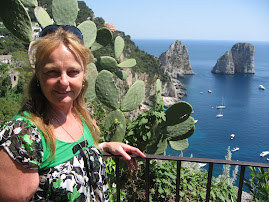
Capri... third time again.. but still as beautiful as ever.. and me too of course!


The three of us at the Top of the Chairlift on Capri... just amazing views and a gorgeous day.


Looking down 100 feet plus.. the sea is so clear.. the white things are boats and the dark shapes is the sea bed!! Honest it is.. the water is just translucent.


Another view from the top of the Chairlift....


Capri Port with all its colour


Thursday, May 01, 2008

Istanbul & our final night in Turkey

All good things come to an end..and off to work we go....

On the top floor of the Aya Sofya... The Aya Sofia (also Haghia Sophia) is a museum nowadays. It was founded as a church on a place where earlier another church stood. That was inaugurated on 15-2-360 during the reign of Constantius, son of Constantine the Great. That one was set alight and burned. During the Nika-uprising in 532 the Great Church, started under Theodosius II, which was the next church on that place, was also destroyed. Remains of that church can be seen at the West of the current church. That was built in 5 years and inaugurated by Justinian on 27-12-537, with the words “Praise the Lord who found me worthy to finish this project. Salomon, I have surpassed you.” (in Greek, I suppose). After Mehmet the Conqueror took the city in 1453 he had the church transferred into a mosque. The mosaics were covered with whitewash. In 1934 they were uncovered.


A view of the Blue Mosque from the verandah of our first night.. introduction drinkies.. The Blue Mosque was founded by Sultan Ahmet I. He ordered Architect Mehmed Aga to begin constuction in 1609 and the whole complex was completed in 1616. The location of the mosque is just opposite the Church of Hagia Sophia in competition which is actually true because Architect Mehmed wanted to construct a bigger dome then Hagia Sophia's. Instead he built the mosque in perfect proportion of domes and semidomes as well as the amazing minarets. There is an interesting story of the mosque; according to it, Sultan Ahmet I wanted to have a minaret made of gold which is "altin" in Turkish. The architect misunderstood him as "alti" which means "six" in English. However, when the architect was shivering as "am I going to be beheaded?", the Sultan Ahmed I liked the minarets so much. Prior to that time, no sultan had a mosque with 6 minarets.


The Aya Sofya in the background.. and back to some warmer weather..


The column was erected by Constantine VII, known also as Porphyrogenetus, around 944 AD for the decoration of the Byzantine Hippodrome. It was made of limestone blocks and completely covered with bronze slabs bearing inscriptions which were dedications made to his grand father Basileus I. Unfortunately all bronze slabs were removed during the rule of the 4th Crusade who melted them to make coins and weapons, therefore none of them survived until our days. The column is about 32 meters high and rests on a small marble base.


The million stone is located at Sultanahmet neighborhood, in the centre of old city. The Million Stone was always put in the center of the city and distances to all corners of the Byzantine Empire were once measured starting from this point. The stone was erected under the reign of Constantine the Great around 4th century AD in the northeastern corner of Augusteion Square, marking the starting point of an extensive road network

And then the last night, which unfortunately was not as lively as it should have been given it was the night following our accident and we hadnt got in to Istanbul until almost 4.30am!!


The Leather Factory Experience at Pamukkale

After all that histsory a bit of retail therapy was needed.. and boy did some take advantage of it! The leather was beautiful and soft.. and not too expensive as leather goes. Some of our group were hoisted onto the stage to model the wares


Phil doing a twirl.. must have been a model in a past life!


And thats the end of the show folks.. now go and spend some money!

The Calcium Terraces & The Hierapolis at Pamukkale

Pamukkale was a sight for sore eyes.. I was 'over' ruined cities.. I mean no matter how amazing they might be one can only take in so many so the landscape of cotton castles or Calcium Terraces was a welcome change.

An unusual natural and historical site with the sparkling white castle -like cascades, Pamukkale is one of the most important highlights of Turkey, unique in the world. The site is named in Turkish as "Pamukkale", that means "cotton castle", parallel to the glorious and spectacular view of the site. The dazzling white calcareous castles are formed by limestone-laden thermal springs, creating the unbelievable formation of stalactites, potholes and cataracts.


They looked just like white candy floss .. and sparkling with it.


Waters in the terraces are the sediments of the springs with calcium bicarbonate in 33C. Waters, containing mainly calcium salts and carbon-dioxide, run off the plateau's by depositing calcium while carbon-dioxide disappearing. The marvelous landscape of Pamukkale has been created by this gradual formation, leaving a cotton-like image.

Located above the theatre of Hierapolis, the mineral water sources from the thermal springs of Cal Mountain. It is collected in a pool, known as the "Sacred Pool" of ancient times, where you can swim amidst the historical remains of Hierapolis. The Sacred Pool is now located inside Pamukkale Hotel.
The water of Pamukkale is famous for its benefits to the eyes and skin; and its curing properties to the ills of asthma, rheumatism, as well. The remains of the ancient Hierapolis are situated on back of the thrilling white terraces, standing wondrously in the area.

And now back to more ancient ruins!! This time the Hierapolis of Pamkkale.

Hierapolis, whose name means "sacred city," was believed by the ancients to have been founded by the god Apollo. It was famed for its sacred hot springs, whose vapors were associated with Pluto, god of the underworld. The city also had a significant Jewish community and was mentioned by Paul in his Letter to Colossians.
Today, Hierapolis is a World Heritage Site.


The theatre of Hierapolis is well-preserved, especially the stage buildings, which were beautifully decorated with reliefs. Constructed around 200 BC, the theater could hold 20,000 spectators and had reserved seating for distinguished spectators in the front row. Today, just 30 rows of seating have survived.


Northwest of the theater are the north Roman baths, built around the late 2nd century AD and used as a Christian basilica beginning in the 5th century.


To the north of the main ruins and along the modern road is the north necropolis (graveyard), the largest in Anatolia. It contains more than 1,200 tombs of various types, including tumuli, sarcophagi and house-shaped tombs from the Hellenistic, Roman and early Christian periods. Some have Jewish inscriptions.


Nearby is the monumental Gate of Domitian constructed around 83 AD to serve as the northern entrance to the city. It has three arches and two towers, and originally had two stories. The gate led into a colonnaded street known as Frontinus Street (named for its builder, the proconsul of Asia, who also built the Gate of Domitian). This was the heart of the city during Roman times, containing shops and public buildings under covered walkways.


East of the Temple of Apollo, toward the theater, are the ruins of a peristyle house with Ionic columns. Dating from the 6th century AD, it includes a courtyard with a floor made from polished stone or glass (called the "opus sectile technique").

Pamukkale - Ephesus & The Shrine to Virgin Mary

Inside the Shrine at Pumukkale

Info on the Shrine to the Virgin Mary ..Located on the top of the "Bulbul" mountain 9 km ahead of Ephesus, the shrine of Virgin Mary enjoys a marvelous atmosphere hidden in the green. It is the place where Mary may have spent her last days. Indeed, she may have come in the area together with Saint John, who spent several years in the area to spread Christianity. Mary preferred this remote place rather than living in crowded place.


The house of Virgin Mary is a typical Roman architectural example, entirely made of stones. In the 4th century AD, a church, combining her house and grave, has been built. The original two-stored house, which consisted of an anteroom (where today candles are proposed), bedroom and praying room (Christian church area) and a room with fireplace (chapel for Muslims). A front kitchen fell into ruins and has been restored in 1940's. Today, only the central part and a room on the right of the altar are open to visitors. From there one can understand that this building looks more like a church than a house. Another interesting place is the "Water of Mary", a source to be found at the exit of the church area and where a rather salt water, with curative properties, can be drunk by all.


Paul VI was the first pope to visit this place in the 1960's. Later, in the 1980's, during his visit, Pope John-Paul II declared the Shrine of Virgin Mary has a pilgrimage place for Christians. It is also visited by Muslims who recognize Mary as the mother of one of their prophets. Every year, on August 15th a ceremony is organized to commemorate Mary's Assumption.


And another lucky wishing wall.. covered in bits of paper and notes... Phil, Greg, Dave and Gabrielle posing...


Phil in front of the dedication outside the Shrine


Ephesus; Ancient Greek city

My favourite.. a footprint pointing in the direction of the Brothel.. the worlds oldest profession!! Ephesus; Ancient Greek city of Asia Minor, near the mouth of the Menderes River, in what is today West Turkey, South of Smyrna (now Izmir). One of the greatest of the Ionian cities, it became the leading seaport of the region. Its wealth was proverbial. The Greek city was near an old center of worship of a native nature goddess, who was equated with the Greek Artemis, and c.550 B.C. a large temple was built. To this Croesus, who captured the city, contributed.


The god of Nike.. oh yes.. and me.


This library is one of the most beautiful structures in Ephesus. It was built in 117 A.D. It was a monumental tomb for Gaius Julius Celsus Polemaeanus, the governor of the province of Asia; from his son Galius Julius Aquila. The grave of Celsus was beneath the ground floor, across the entrance and there was a statue of Athena over it. Because Athena was the goddess of the wisdom.
The scrolls of the manuscripts were kept in cupboards in niches on the walls. There were double walls behind the bookcases to prevent the them from the extremes of temperature and humidity. The capacity of the library was more than 12,000 scrolls. It was the third richest library in ancient times after the Alexandra and Pergamum.
The facade of the library has two-stories, with Corinthian style columns on the ground floor and three entrances to the building. There is three windows openings in the upper story. They used an optical trick that the columns at the sides of the facade are shorter than those at the center, giving the illusion of the building being greater in size.


Just a few words of explanation....


And I guess this one doesnt need any explanation.. wherever there are tourists... Genuine Fake Watches.. I ask you!!!

Ephesus; Ancient Greek city of Asia Minor, near the mouth of the Menderes River, in what is today West Turkey, South of Smyrna (now Izmir). One of the greatest of the Ionian cities, it became the leading seaport of the region. Its wealth was proverbial. The Greek city was near an old center of worship of a native nature goddess, who was equated with the Greek Artemis, and c.550 B.C. a large temple was built. To this Croesus, who captured the city, contributed.


In 356BC the Greeks built the Artemesium (a colossal Ionic temple dedicated to Artemis the fertility goddess) which was one of the Seven Wonders of the ancient world. During the 2nd century BC, Ephesus was the fourth largest city in the eastern Roman Empire, famous for its Artemesium, the Library of Celsus and its medical school.